
What Phnom Penh Can Learn From the World’s Most Iconic Residential Towers
Why Some Buildings Become Symbols of Their Cities
Throughout history, cities have expressed their ambitions through architecture. Cathedrals once dominated medieval skylines, government buildings symbolized national identity, and cultural institutions reflected civic pride. In the modern era, however, residential towers have increasingly become some of the most recognizable symbols of urban transformation. While cities around the world continue to build upward, only a small number of these towers ultimately become icons.
The difference is significant. Thousands of residential towers are constructed every decade, yet very few transcend their original purpose to become part of a city's identity. These are the buildings that appear in photographs, films, postcards, and social media feeds long after their completion. They are recognized not only by residents and investors, but also by people who may never set foot inside them. Their success lies in something greater than sales performance or engineering achievement. They contribute meaningfully to the story of a city.
As Phnom Penh continues to evolve, this raises an important question: what can Cambodia's capital learn from the world's most iconic residential towers? By examining several internationally celebrated examples, we can better understand the principles that transform buildings from successful developments into enduring landmarks.
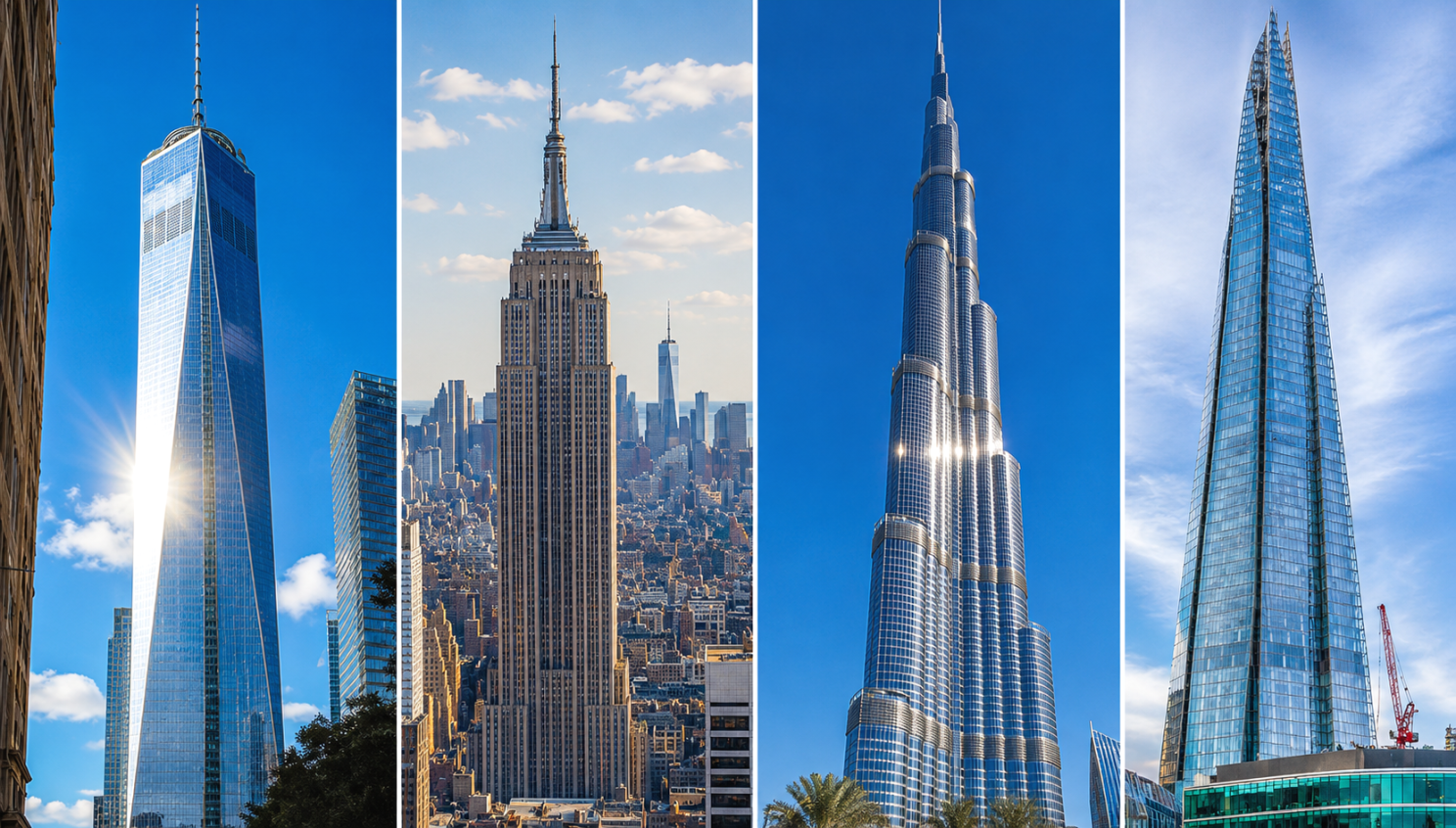
Beyond Height: Why Iconic Buildings Are Rarely Defined by Size Alone
Real estate has always been attracted to measurable achievements. Developers often compete through height, floor count, penthouse size, and the breadth of amenities offered. While these metrics can generate attention and support marketing campaigns, history suggests that they rarely determine whether a building will be remembered decades later.
Many of the world's tallest residential towers remain relatively unknown outside their immediate markets. At the same time, some of the most admired residential buildings are not the tallest structures in their cities. Architectural significance is rarely measured in meters. Instead, it emerges through a combination of identity, proportion, material quality, context, and the emotional response a building creates.
The towers that become icons share a common characteristic: they can be recognized instantly. Their architectural language is clear, their presence is memorable, and their relationship with the city extends beyond their physical footprint.
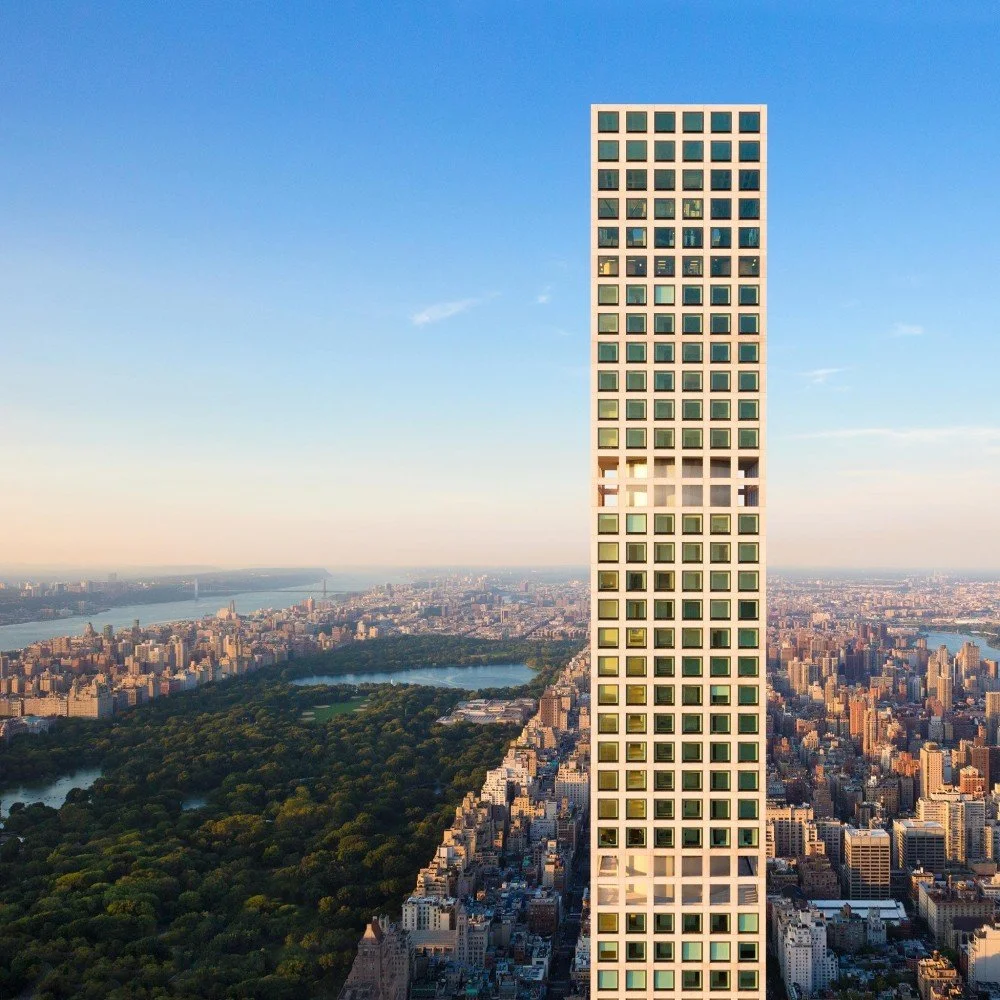
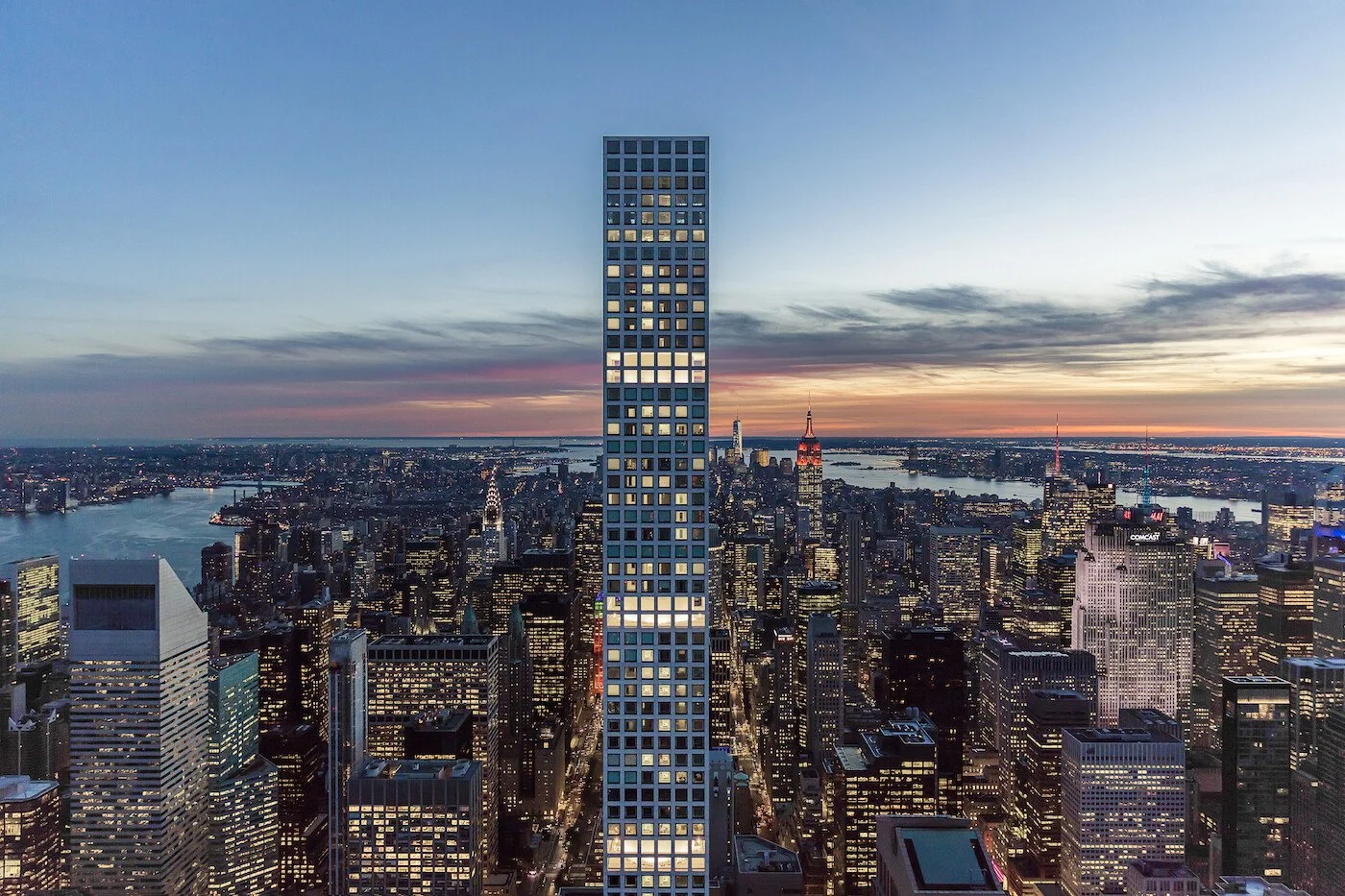
432 Park Avenue, New York
The Power of Architectural Restraint
Few residential towers demonstrate the value of simplicity as effectively as 432 Park Avenue in New York. Rising above Manhattan as a nearly perfect square, the building is remarkable not because of decorative complexity but because of its extraordinary discipline. Its design eliminates unnecessary gestures and focuses instead on proportion, rhythm, and clarity.
The result is a tower that has become one of the most recognizable elements of New York's contemporary skyline. Although many newer buildings feature more elaborate forms and increasingly sophisticated façades, 432 Park Avenue continues to stand out because its concept is immediately understandable. It proves that architectural confidence often comes from restraint rather than excess.
For Phnom Penh, the lesson is clear. Luxury architecture does not necessarily require dramatic curves, extravagant crowns, or complex forms. Sometimes a simple idea executed exceptionally well can create a stronger and more enduring identity than a design that attempts to do too much.
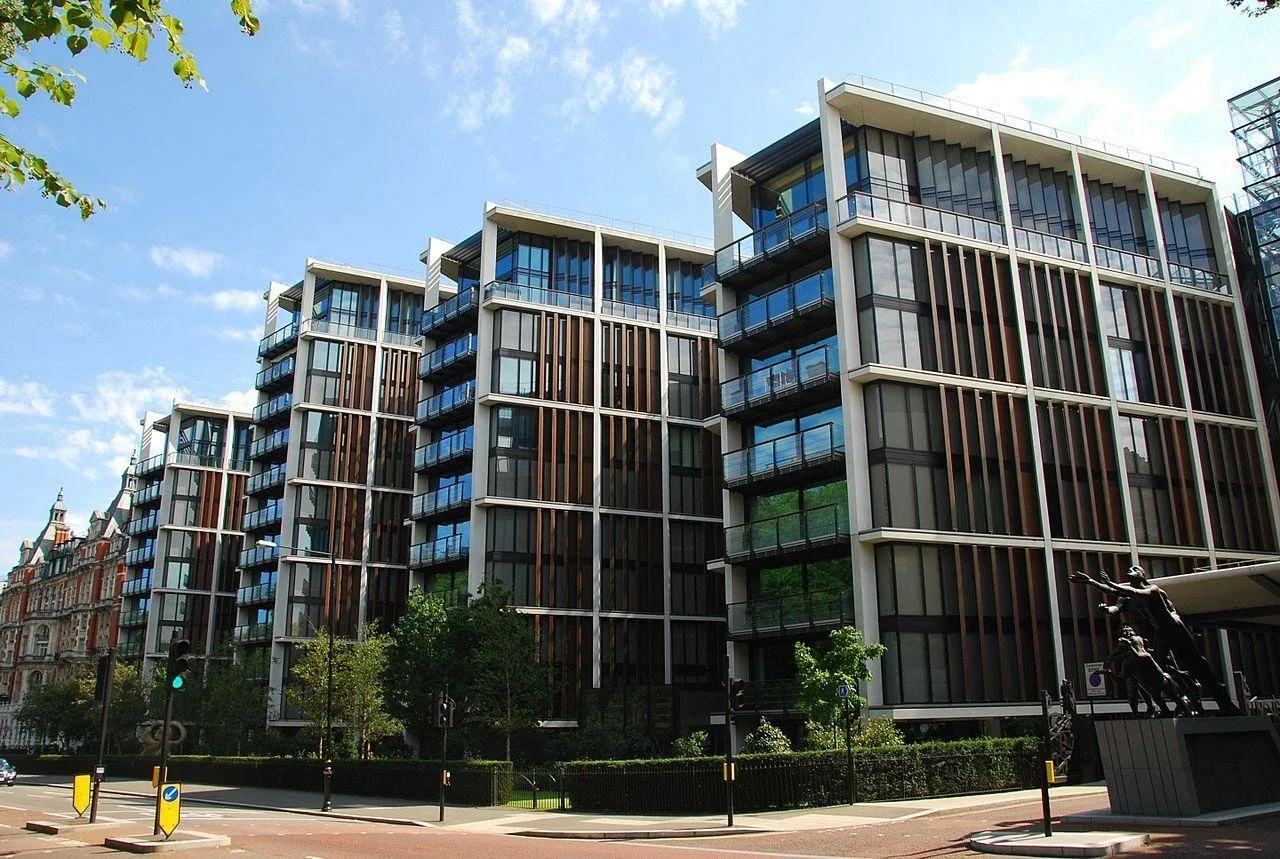
One Hyde Park, London
Why Quality Outlasts Novelty
Located in one of London's most prestigious districts, One Hyde Park is frequently cited among the world's most desirable residential developments. What makes the project particularly interesting is that its reputation is not built upon extraordinary height or visual spectacle. Instead, its value comes from craftsmanship, material quality, and attention to detail.
The architecture communicates exclusivity through refinement rather than through overt displays of luxury. High-quality materials, elegant proportions, and meticulous detailing create a building that feels timeless rather than fashionable. This distinction is important because fashion changes quickly, whereas timelessness retains value across generations.
As Phnom Penh's luxury residential market matures, buyers may increasingly prioritize long-term quality over short-term novelty. Buildings that age gracefully are often more successful than those designed solely to attract attention at launch.
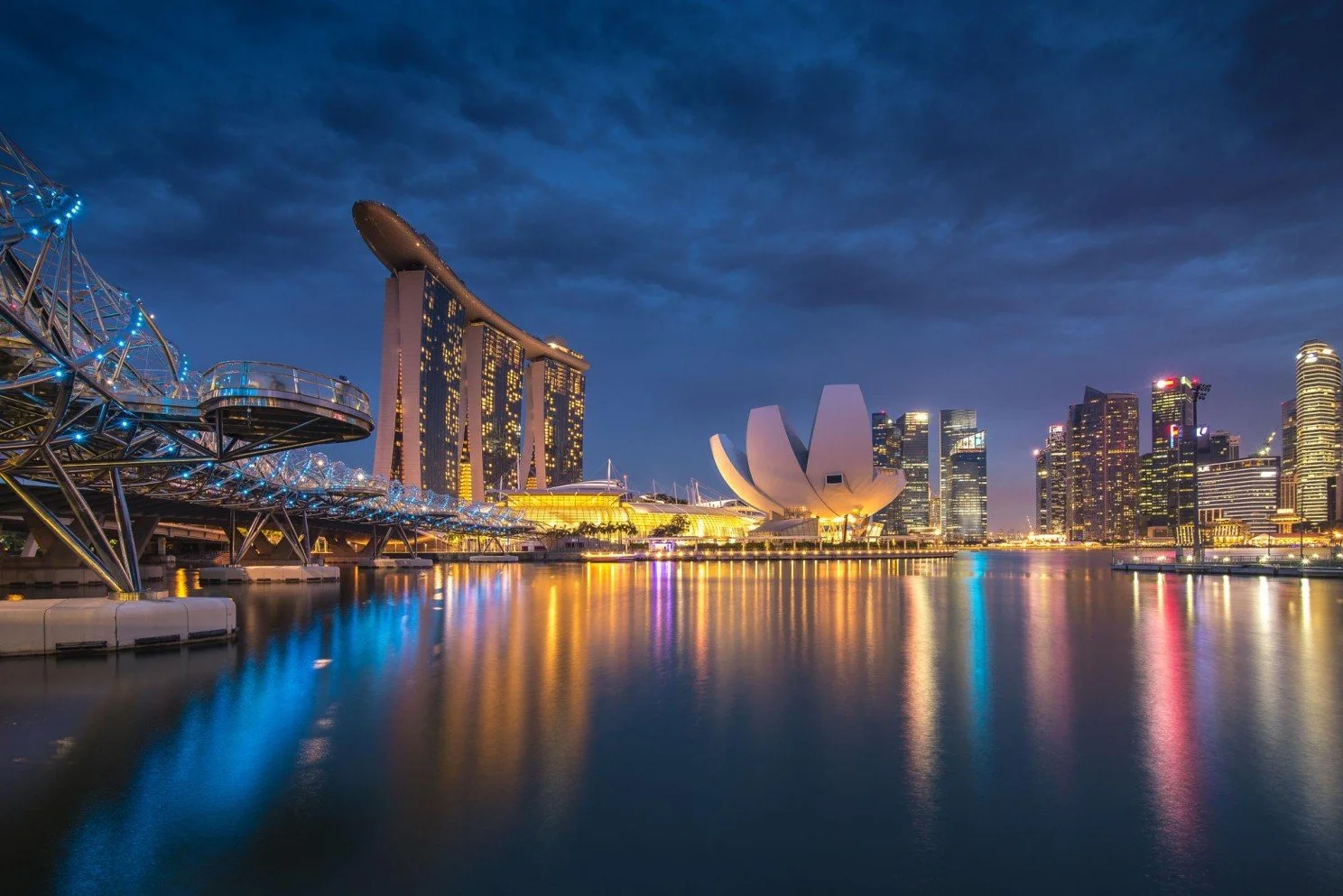
Marina Bay Sands, Singapore
The Importance of Skyline Identity
Few modern developments have transformed a city's image as dramatically as Marina Bay Sands. Although it is widely recognized as a mixed-use destination, its residential and hospitality components offer an important lesson in skyline design.
Before Marina Bay Sands was completed, Singapore already possessed an impressive skyline. Yet the project introduced a visual identity that immediately became associated with the city itself. Today, it is almost impossible to discuss Singapore's modern image without referencing the building.
This demonstrates an important principle: architecture can contribute to city branding. The most successful buildings do not simply occupy space within a skyline; they help define the skyline itself.
For Phnom Penh, which is still establishing its modern architectural identity, this lesson may prove especially valuable. Future landmark towers should aspire not only to be successful developments but also to become meaningful contributors to the city's image.
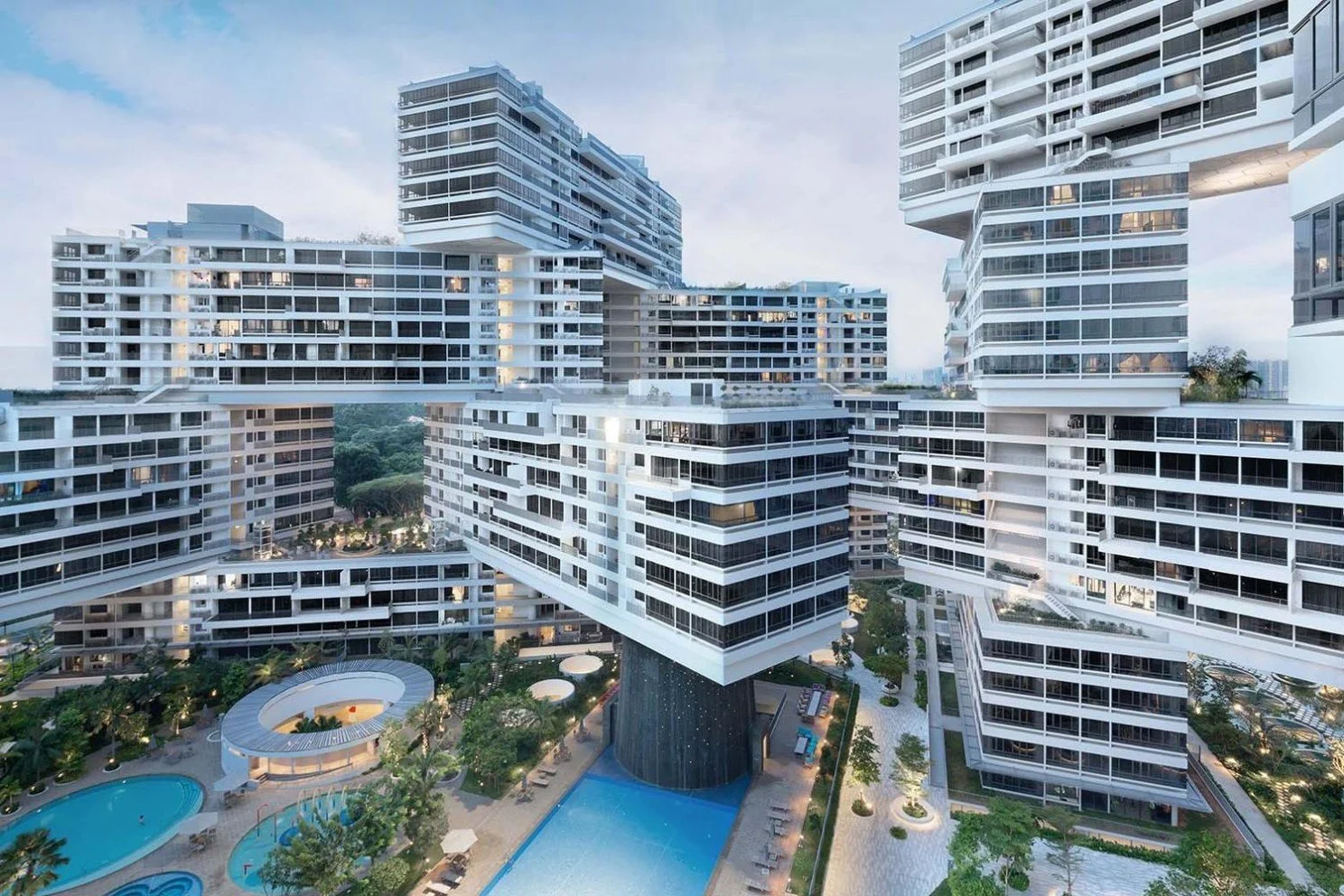
The Interlace, Singapore
Innovation Beyond Height
The Interlace challenged conventional assumptions about high-rise living by reimagining how residential density could be organized. Rather than following the traditional tower model, the project arranged residential blocks in an interconnected composition that created new forms of community, open space, and visual interest.
Its significance lies not in height but in innovation. The project demonstrates that some of the most influential residential developments become important because they introduce new ideas rather than larger dimensions.
As Phnom Penh continues to expand, innovation in residential typology may become just as important as innovation in engineering. Future landmark developments may be remembered not because they are taller, but because they redefine how people live.
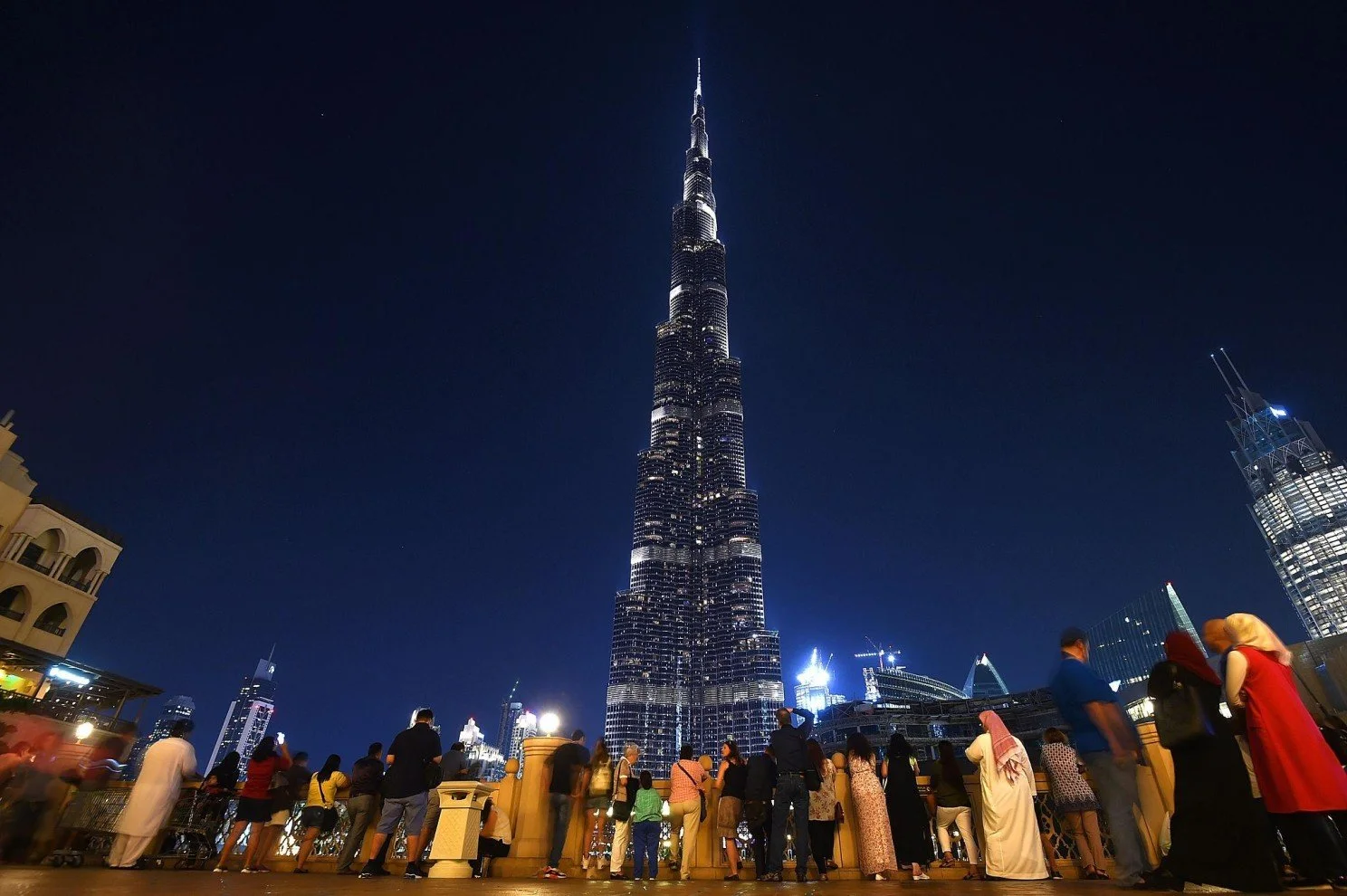
Burj Khalifa Residences, Dubai
Architecture as a Reflection of Ambition
Although the Burj Khalifa is often discussed in terms of height, its true significance extends far beyond engineering. The building has become a global symbol of Dubai's ambition, confidence, and willingness to challenge conventional limits.
What makes the project remarkable is not simply its scale, but the way it reflects the aspirations of the city that built it. Architecture becomes most powerful when it communicates something larger than itself.
For Phnom Penh, this raises an important consideration. Landmark buildings should not merely imitate international trends. Instead, they should express the ambitions, culture, and identity of the city they represent.
What These Towers Have in Common
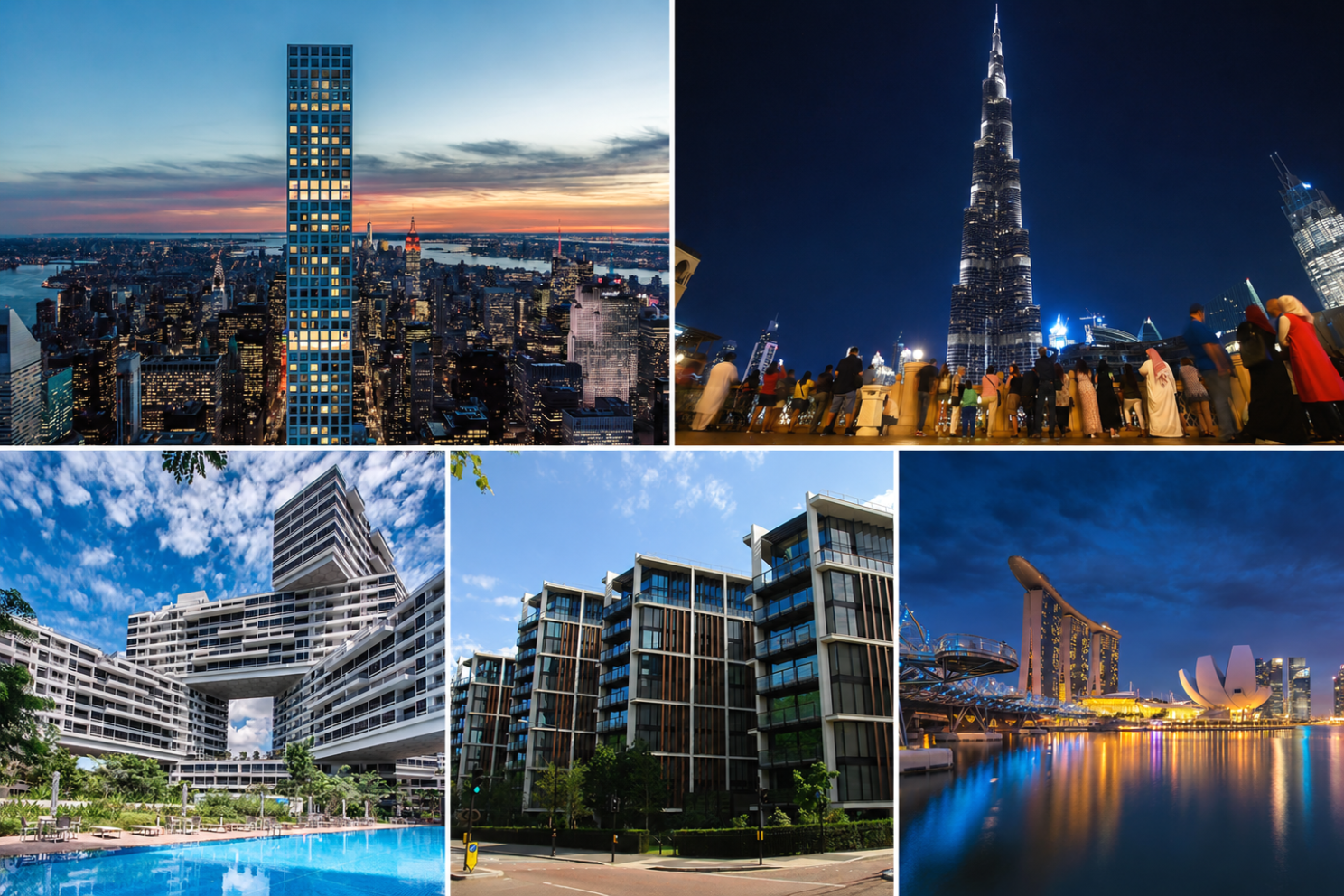
Despite their differences in location, scale, and architectural style, the world's most iconic residential towers share several recurring characteristics. Each possesses a clear identity that can be understood almost immediately. Each contributes positively to its skyline rather than merely occupying space within it. Each demonstrates a commitment to quality that allows it to age gracefully, and each creates memorable experiences for the people who live in or interact with it.
Perhaps most importantly, these buildings maintain a meaningful relationship with their context. They respond to their surroundings, reflect the aspirations of their cities, and contribute to a broader urban narrative.
Phnom Penh's Next Chapter
Compared with cities such as New York, London, Singapore, and Dubai, Phnom Penh's modern skyline remains relatively young. Yet this youth presents an opportunity rather than a limitation. The city is still defining its architectural identity, and many of tomorrow's landmarks have not yet been built.
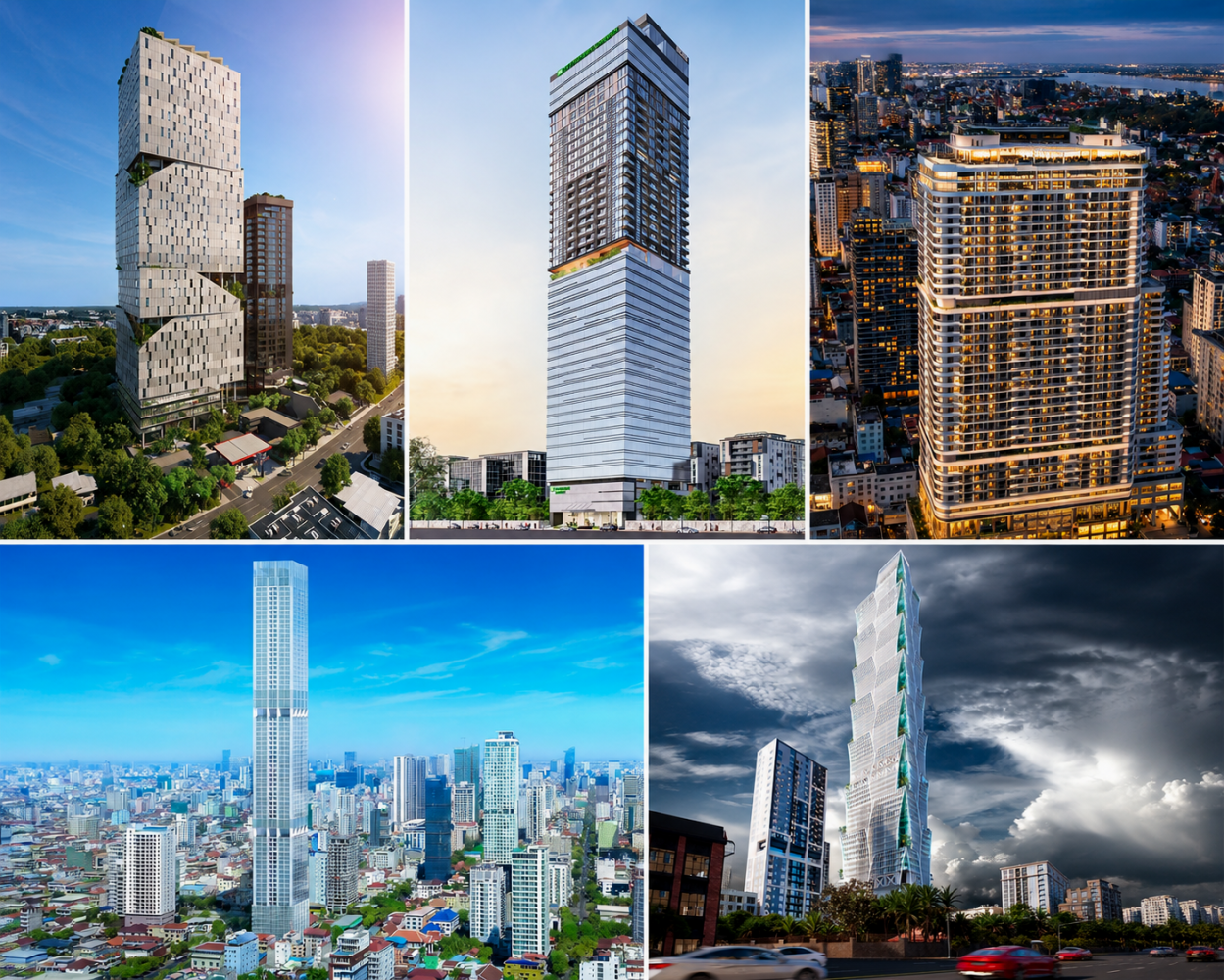
Recent projects such as Le Condé, UC88 Wyndham Garden, Morgan Tower, City View Residence, and La Vista One suggest that the conversation is gradually shifting beyond simple measures of height and density. Increasingly, developers are paying attention to façade design, skyline presence, residential experience, and architectural identity.
This evolution is encouraging because it reflects a broader maturation of the market. The next generation of iconic towers in Phnom Penh will likely be remembered not because they are the tallest or most expensive, but because they contribute something meaningful to the city.
Final Thoughts
After nearly fifteen years working across market research, valuation, market intelligence, data analytics, and more recently luxury-residential curation, I have become increasingly interested in the role architecture plays in shaping cities.
Buildings are more than investments. They are cultural statements that reflect ambitions, values, and aspirations. The world's most iconic residential towers remind us that great architecture is rarely defined by height alone. Instead, it emerges through identity, quality, innovation, and the ability to contribute meaningfully to the story of a place.
As Phnom Penh continues its transformation, the most successful developments will not simply add floors to the skyline. They will add meaning to it.
About the Author
Hoem Seiha has spent nearly 15 years in Cambodia's real estate industry, specializing in market research, valuation, market intelligence, and big-data analytics. Today, his work increasingly focuses on luxury-residential curation, where architecture, design, lifestyle, and investment intersect.
Hoem Seiha Curator of Luxe Residences | ERA Cambodia
📞 Analog: +855-10-699-553
💬 Telegram: t.me/hoemseiha_era
💬 WhatsApp: wa.me/85510699553