
The Five Pillars of Luxury Architecture in Phnom Penh’s New Generation of Residential Towers
Beyond Height, Price, and Amenities
When discussing luxury residential towers, most conversations revolve around familiar topics:
How high is the building?
How much does a penthouse cost?
What facilities are included?
While these factors certainly matter, they rarely explain why certain buildings become memorable while others fade into the background.
In a previous article, I explored the concept that luxury architecture begins long before someone enters the lobby. Some buildings possess an immediate sense of prestige, identity, and presence. Others simply occupy space.
To better understand this phenomenon, I introduced what I call the Five Pillars of Luxury Architecture:
Proportion
Façade
Crown
Arrival Experience
Skyline Presence
Today, I would like to apply this framework to a selection of Phnom Penh's recently completed or substantially completed residential towers.
Importantly, this article focuses on buildings that can be physically experienced today—not future renderings or architectural intentions. The objective is not to rank winners and losers, but rather to understand how different developments contribute to Phnom Penh's evolving skyline.
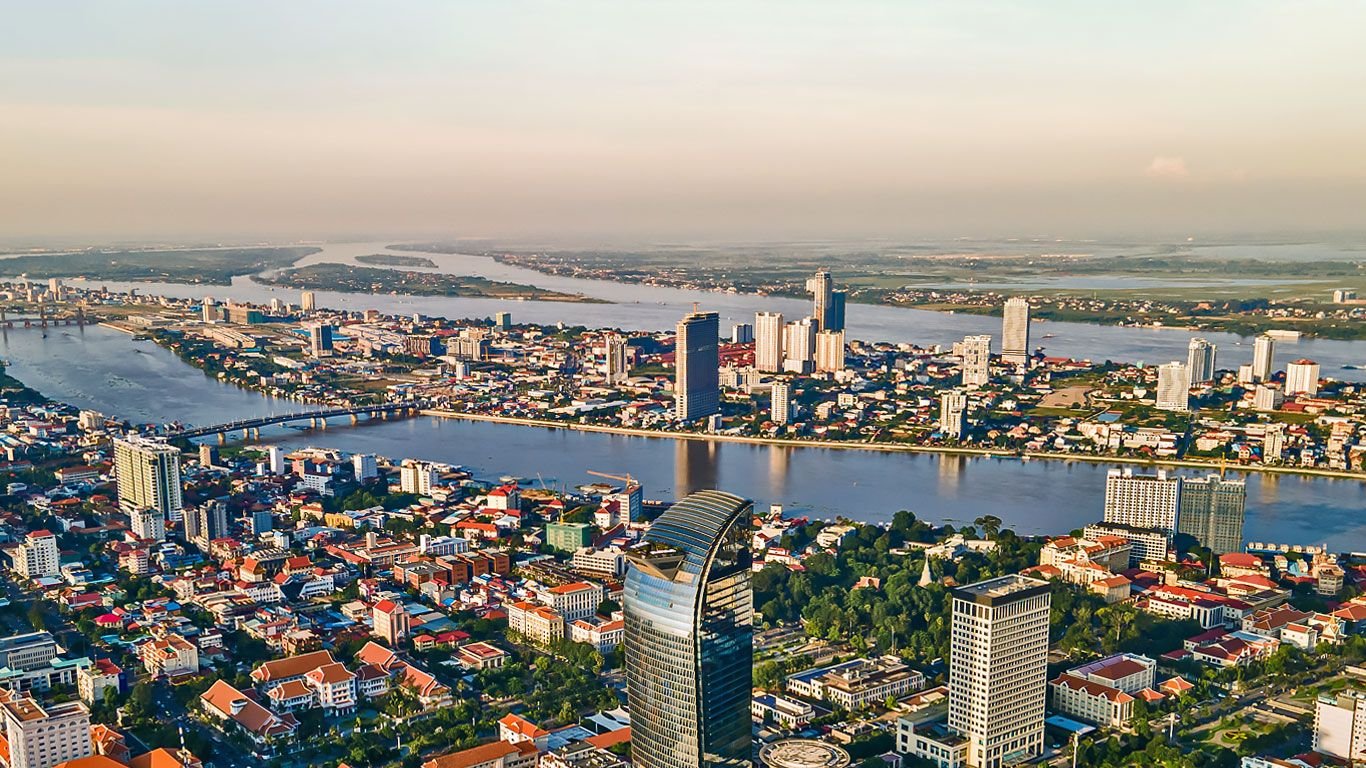
The Five Pillars Framework
Pillar >> What It Represents
Proportion >> Balance, elegance, and visual harmony
Façade >> Architectural identity and character
Crown >> The building's relationship with the skyline
Arrival Experience >> The emotional transition from city to residence
Skyline Presence >> Long-distance visibility and urban contribution
Each tower expresses these pillars differently.
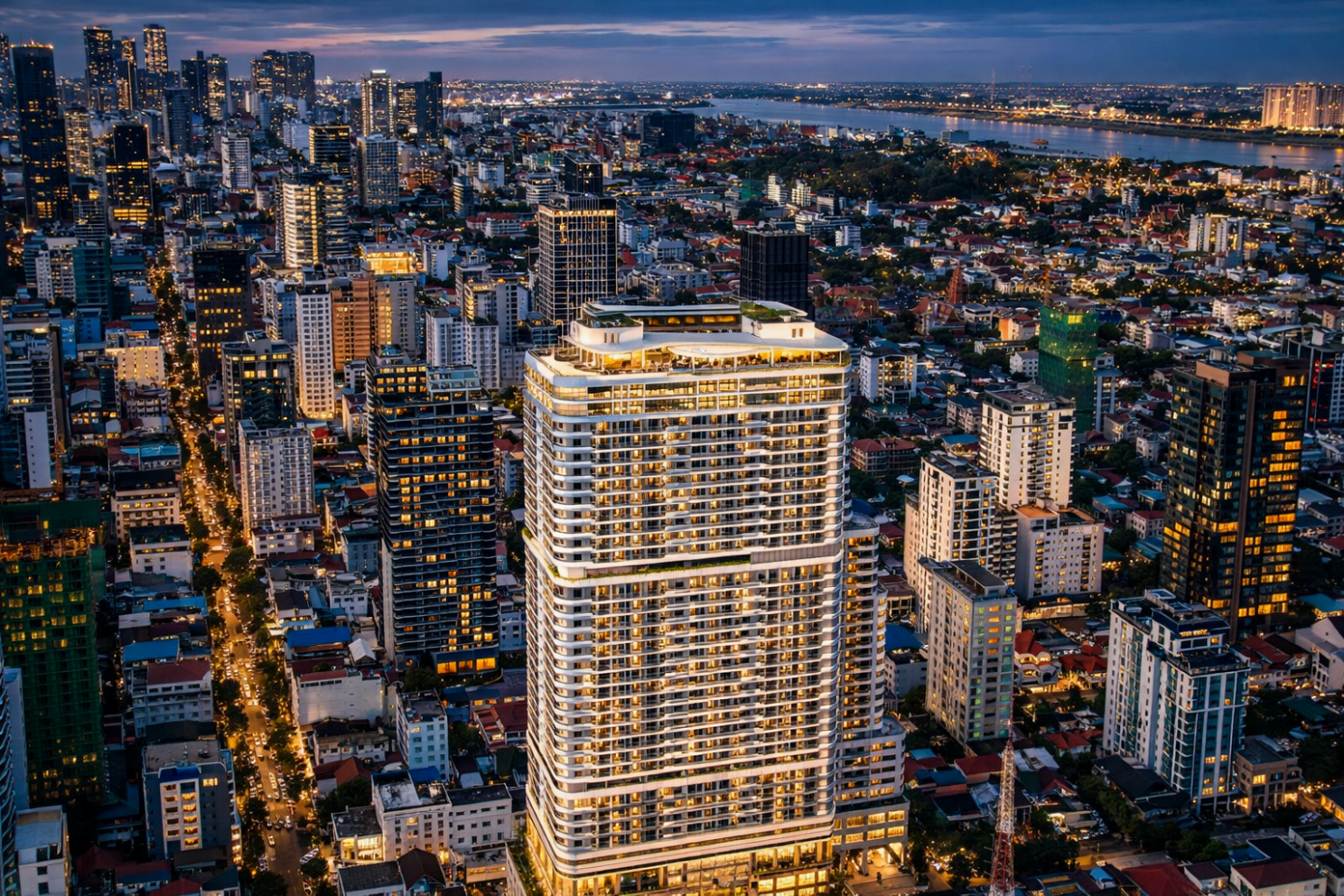
Le Condé BKK1
The Urban Luxury Landmark
Among Phnom Penh's recent luxury towers, Le Condé is perhaps one of the most architecturally recognizable.
Located in the heart of BKK1, the building distinguishes itself through its sculpted façade and carefully articulated massing. Rather than relying solely on glass, the design introduces depth, rhythm, and visual layering.
This is a tower that seeks architectural identity rather than mere height.
Architectural Observations
Proportion The tower maintains a balanced vertical expression while avoiding excessive bulk.
Façade - Its strongest characteristic. The façade creates movement and depth that remain recognizable from multiple viewing angles.
Crown - Subtle rather than dramatic, allowing the building's overall form to remain the primary visual statement.
Arrival Experience - Strong urban luxury positioning with a clear sense of exclusivity.
Skyline Presence - Significant within the BKK1 district and increasingly recognizable across Phnom Penh.
Architectural Identity
Le Condé represents architectural refinement. Rather than competing through height alone, it competes through design language.
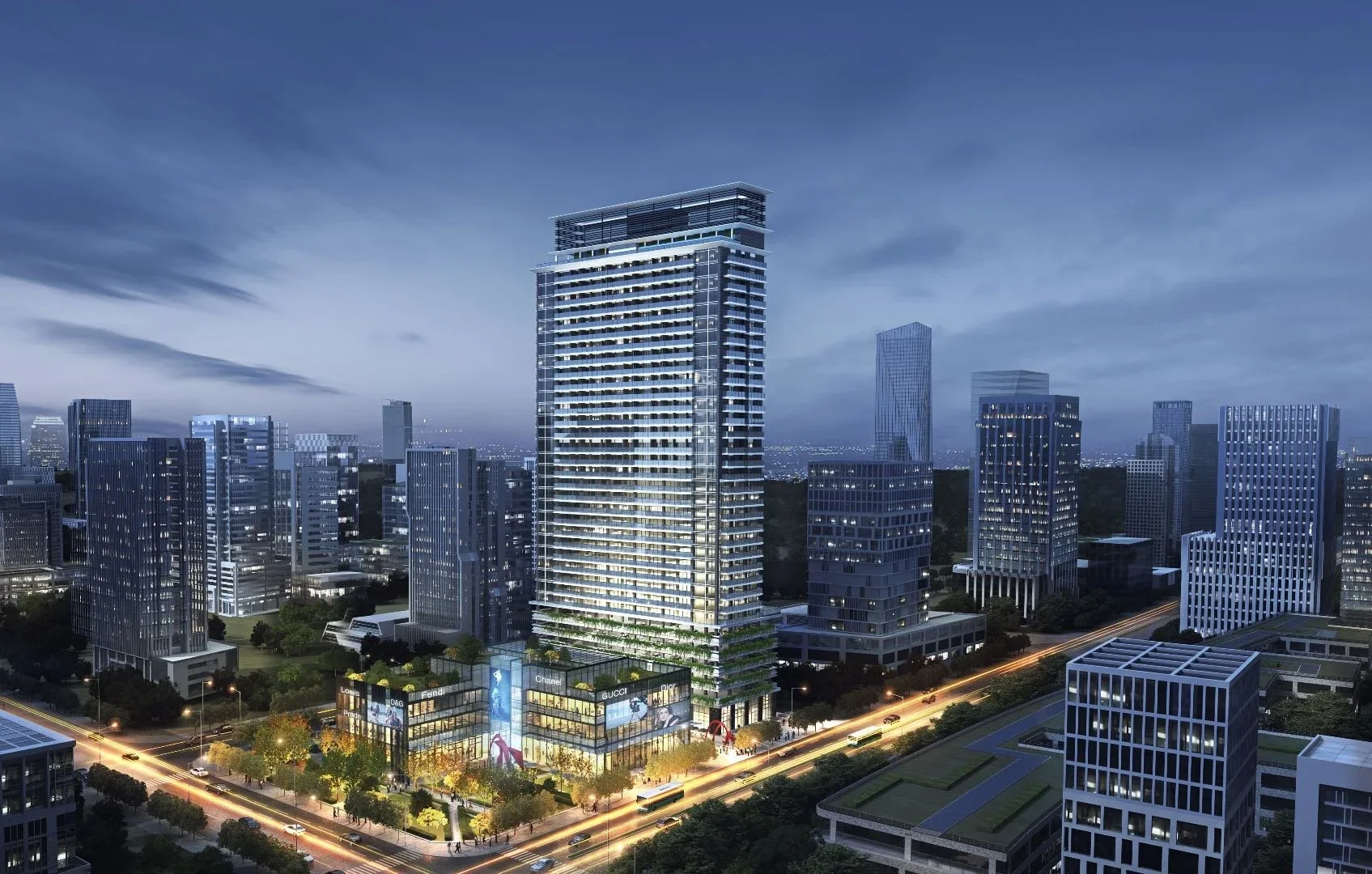
UC88 Wyndham Garden
The Skyline Tower
UC88 Wyndham Garden approaches luxury through verticality.
Its slender profile and prominent position within BKK1 make it highly visible from many parts of the city.
Unlike some residential developments that blend into their surroundings, UC88 embraces its role as a skyline contributor.
Architectural Observations
Proportion - A strong height-to-width ratio creates elegance and visual confidence.
Façade - Contemporary international styling with emphasis on glass and vertical expression.
Crown - One of the building's strongest features, helping define its silhouette from a distance.
Arrival Experience - Contemporary luxury, supported by branded-residence positioning.
Skyline Presence - Among the strongest in Phnom Penh's residential market.
Architectural Identity
UC88 Wyndham Garden represents skyline ambition. Its architecture is most successful when viewed as part of the city's larger skyline composition.

City View Residence
The Residence of Scale
City View Residence presents a different interpretation of luxury. Rather than focusing on height or visual drama, the project emphasizes scale of living.
Large residences, full-floor opportunities, and low-density planning create an experience more closely associated with private homes than conventional condominiums.
Architectural Observations
Proportion - Balanced and substantial.
Façade - Contemporary and restrained rather than expressive.
Crown - Understated.
Arrival Experience - Strong emphasis on residential exclusivity.
Skyline Presence - Moderate, but not intended as a skyline icon.
Architectural Identity
City View Residence represents residential exclusivity. Its luxury is experienced through space rather than spectacle.
Morgan Tower
The Riverfront Urban Marker
Morgan Tower occupies a strategic position within Koh Pich (Diamond Island), one of Phnom Penh's most significant urban expansion zones.
Its architectural significance comes less from iconic form and more from its relationship with the surrounding urban fabric and waterfront setting.
Architectural Observations
Proportion - Strong vertical presence within its immediate context.
Façade - Modern and contemporary, prioritizing clarity and functionality.
Crown - Moderate visual emphasis.
Arrival Experience - Enhanced by its waterfront context and island setting.
Skyline Presence - Visible across multiple riverfront corridors and key urban viewpoints.
Architectural Identity
Morgan Tower functions as an urban marker. It helps define the contemporary identity of Koh Pich while contributing to Phnom Penh's expanding riverfront skyline.
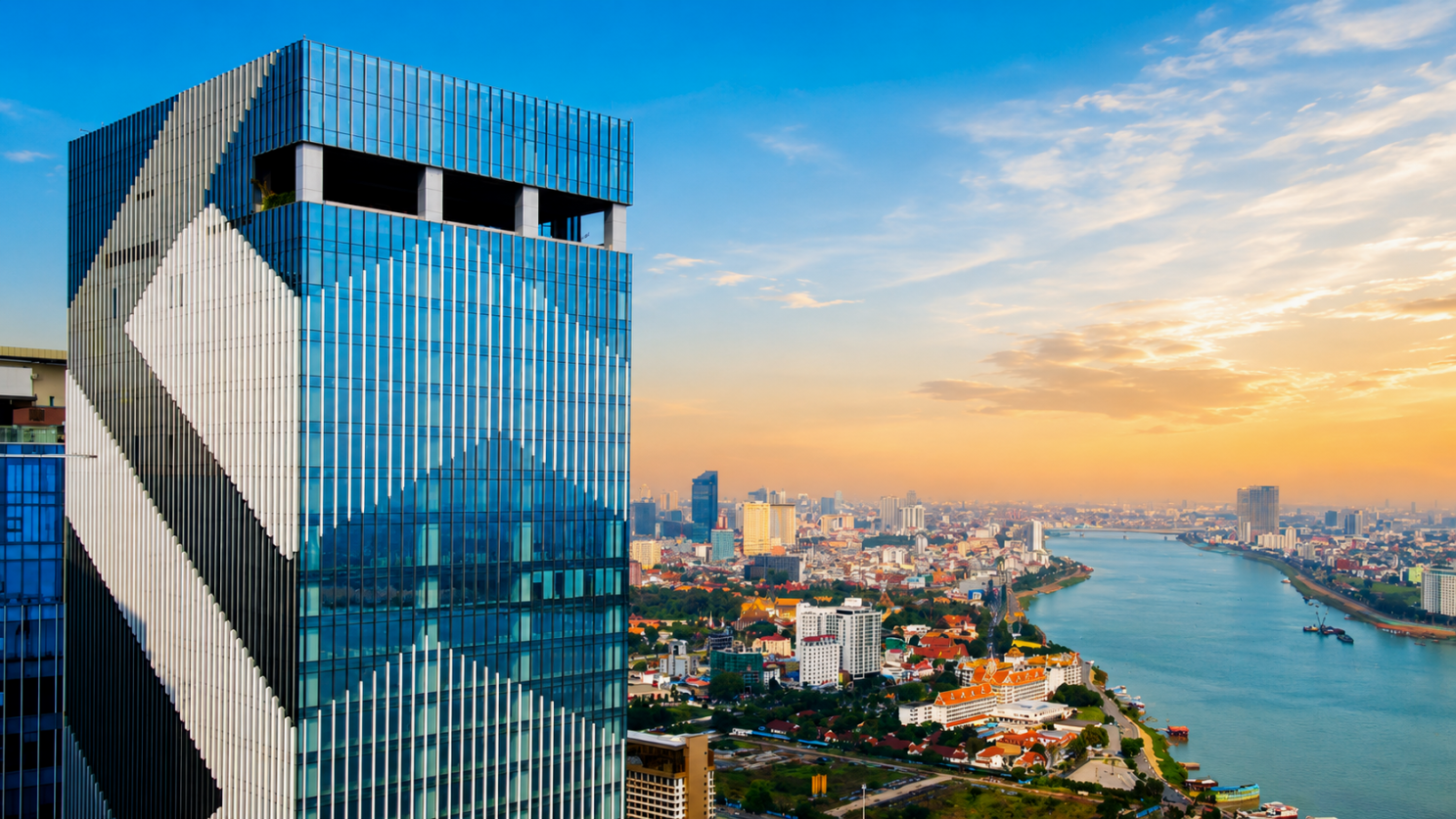
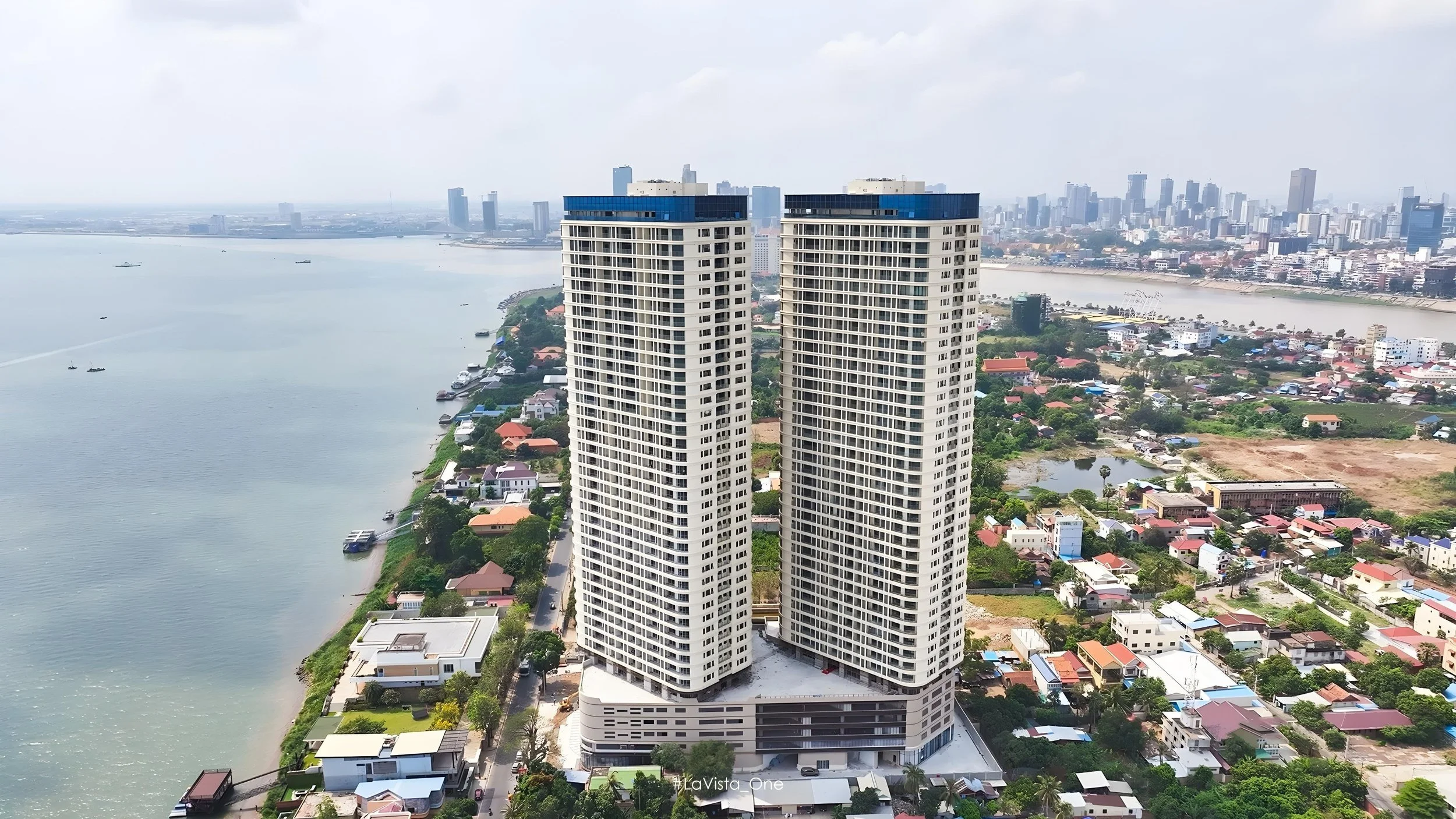
La Vista One
The Sky-Villa Innovator
La Vista One introduces a different conversation altogether.
Rather than focusing solely on conventional apartment living, the project explores the concept of vertical villas and sky residences.
This creates a unique architectural proposition within Phnom Penh's luxury market.
Architectural Observations
Proportion - Well-balanced composition with strong horizontal and vertical interplay.
Façade - One of the project's strongest attributes, creating a distinct visual identity.
Crown - Elegant and integrated with the overall design language.
Arrival Experience - Strong lifestyle-oriented positioning.
Skyline Presence - Significant, particularly from riverfront perspectives.
Architectural Identity
La Vista One represents innovation in residential typology. It challenges the traditional distinction between villa and condominium living.
A Skyline Still Being Written
What makes Phnom Penh fascinating today is that its architectural story remains unfinished.
Cities such as Singapore, Hong Kong, and Dubai already possess mature skyline identities shaped over decades.
Phnom Penh is still defining its own. The towers being completed today will influence how future generations perceive the city.
Some buildings will eventually be remembered for their sales performance. Others will be remembered for their architecture.
The distinction often lies in the Five Pillars.
Final Comments
After nearly 15 years working across market research, valuation, market intelligence, big-data analytics, and more recently luxury-residential curation, I have become increasingly interested in the relationship between architecture and perception.
A residence is more than a collection of square meters. A tower is more than a collection of floors.
The most successful buildings contribute something larger than themselves. They shape skylines. They influence neighborhoods. They establish identity. And ultimately, they become part of a city's story.
As Phnom Penh continues its transformation, it will be fascinating to see which towers emerge as the defining architectural icons of the next generation.
About the Author
Hoem Seiha has spent nearly 15 years in Cambodia's real estate industry, specializing in market research, market intelligence, valuation, and data analytics. Today, his work increasingly focuses on luxury-residential curation, where architecture, design, lifestyle, and investment intersect.
Hoem Seiha, Curator of Luxe Residences, ERA Cambodia
📞 +855 10 699 553 / WhatsApp
📲 Telegram: t.me/hoemseiha_era