
For years, real estate has been measured largely by one thing:
price per square meter.
Bigger units. Higher sellable area. More density.
But increasingly, buyers around the world are beginning to ask a different question:
What kind of life does this property actually create?
Because ownership today is no longer only about space.
It is about experience.
And perhaps this is where coastal lifestyle developments begin to differ fundamentally from conventional urban condominiums.
The Traditional Urban Formula
In most city developments, the business model is straightforward: maximize sellable area. The more private units a building contains, the more inventory can be sold. As a result, many urban condominiums prioritize:
density
efficiency
compact layouts
revenue optimization
Common areas often become secondary. Lifestyle space becomes compressed. And over time, many projects begin to feel similar:
crowded facilities
repetitive layouts
limited greenery
minimal emotional atmosphere
The focus becomes ownership of space — not ownership of experience.
A Different Philosophy
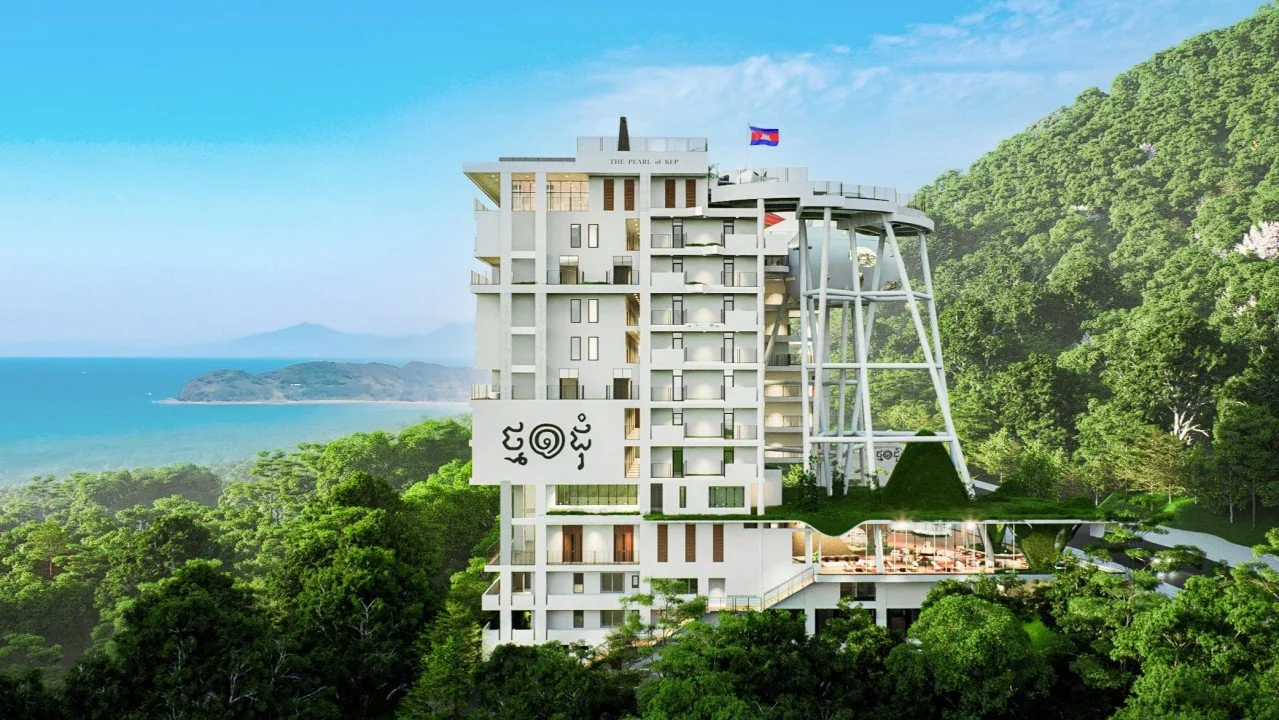
The Pearl of Kep was designed with a very different allocation philosophy.
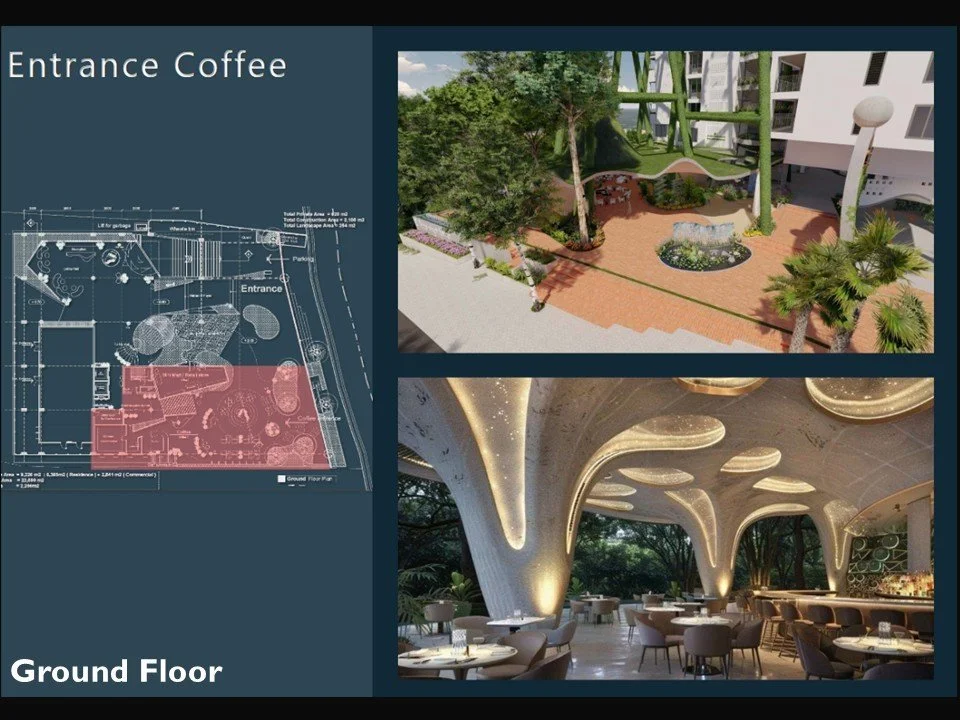
Instead of maximizing sellable residential space, the project intentionally dedicates a large portion of the development toward lifestyle and environmental experience.
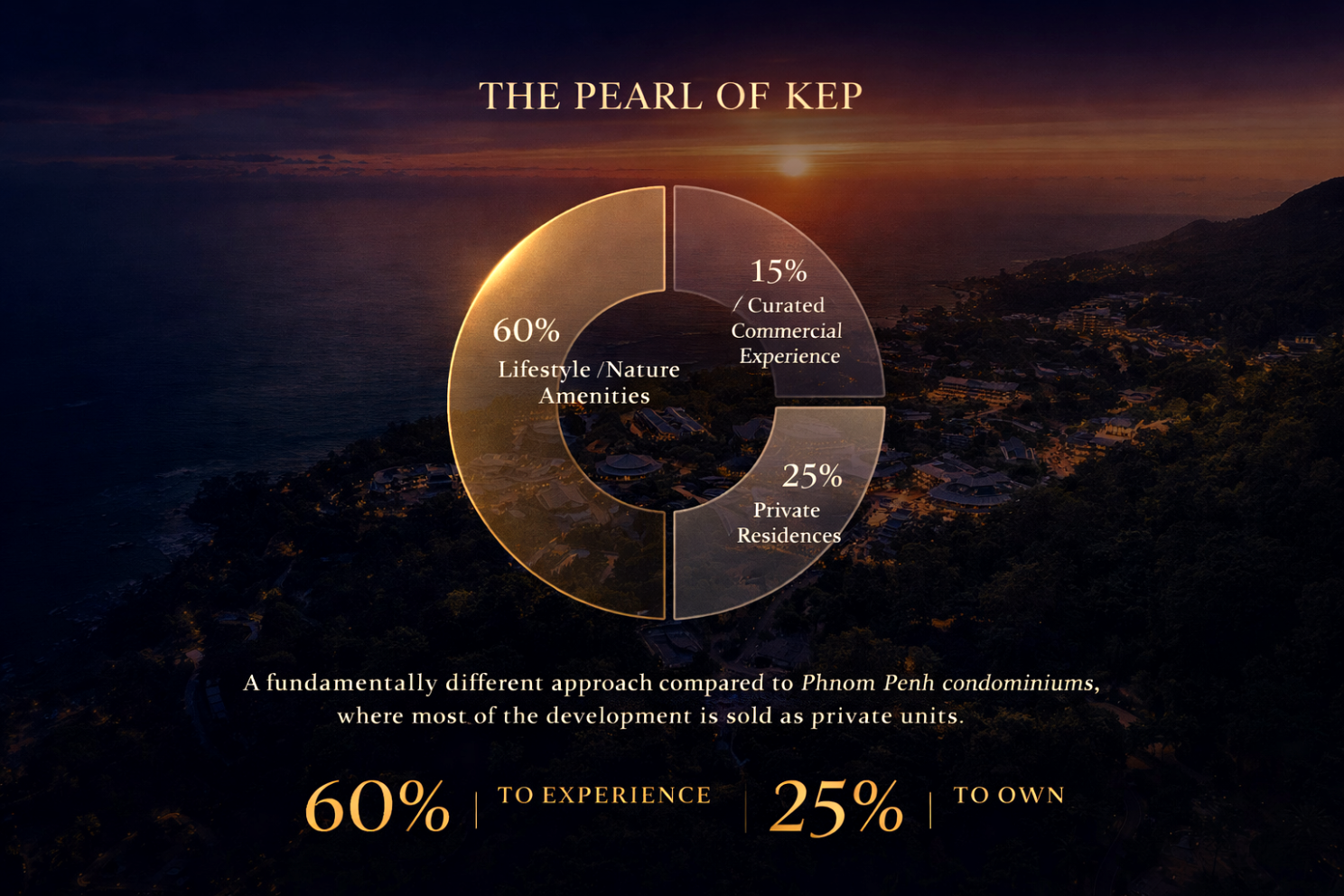
Project allocation:
Approximately 25% private residential ownership
Up to 60% lifestyle and nature-oriented amenities
Approximately 15% commercial and supporting lifestyle components
This changes the entire emotional experience of the project.
The value is no longer measured only by:
interior size
unit efficiency
density ratios
Instead, value expands into:
atmosphere, openness ,movement, wellness, visual breathing space, emotional comfort
The Luxury of Space Beyond Your Walls
One of the biggest shifts in modern luxury living is this:
People increasingly value the experience surrounding their residence — not only the residence itself.
In lifestyle-oriented projects, buyers are no longer evaluating only
living rooms
bedrooms
kitchens
They are evaluating:
how the building feels
how the environment flows
how nature is integrated
how crowded common areas become
how emotionally restorative the space feels
In many ways, modern luxury is moving away from: ownership of enclosed square meters
toward: ownership of a better daily experience.
Kep vs Phnom Penh: Two Different Living Models
This difference becomes especially visible when comparing lifestyle-oriented coastal developments with dense urban condominiums.
In Phnom Penh, many projects are designed around:
city convenience
compact efficiency
maximizing residential ratios
vertical density
That model works well for urban functionality.
But coastal lifestyle developments operate under a different philosophy.
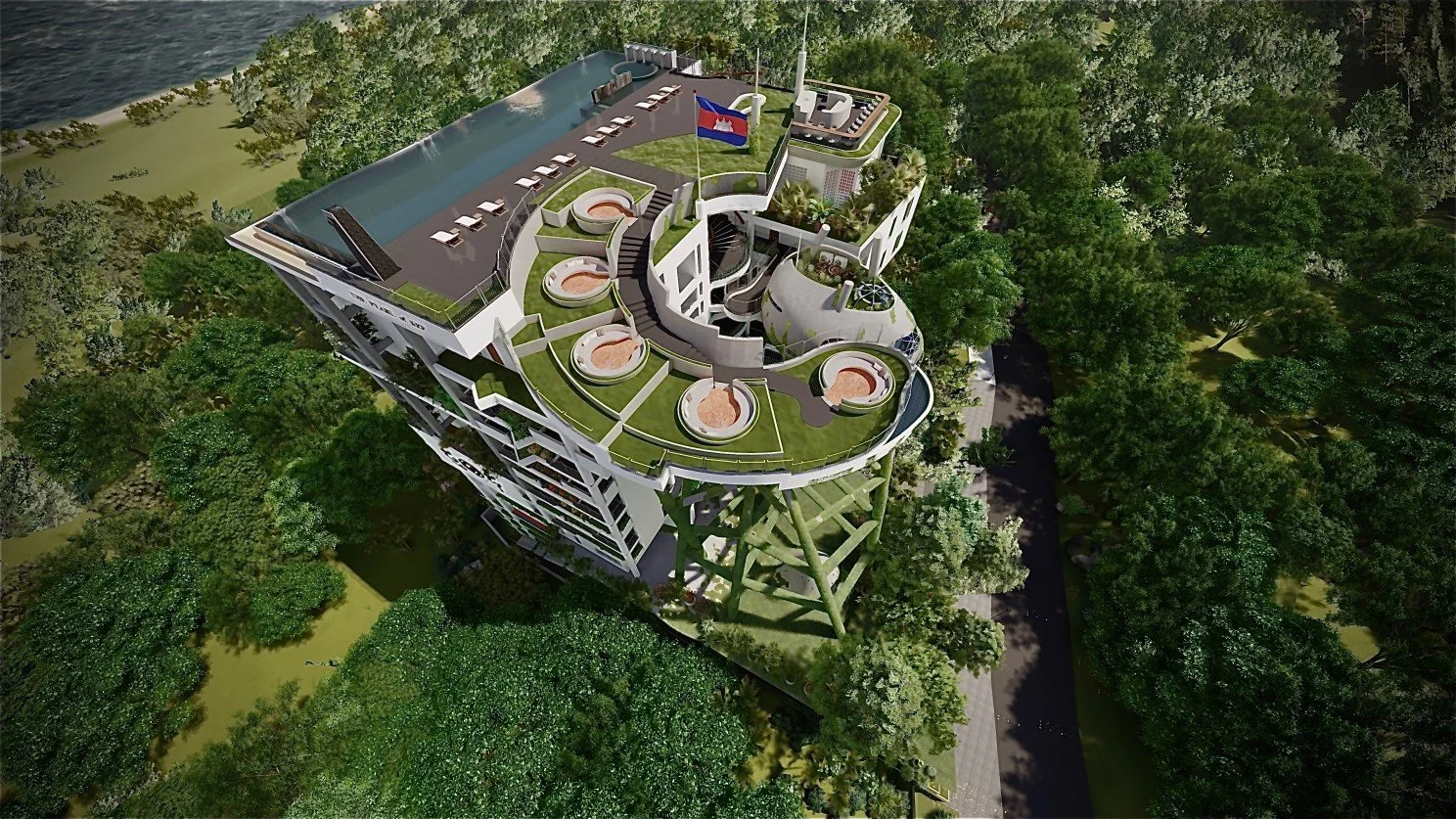
At The Pearl of Kep:
the hillside environment becomes part of the residence
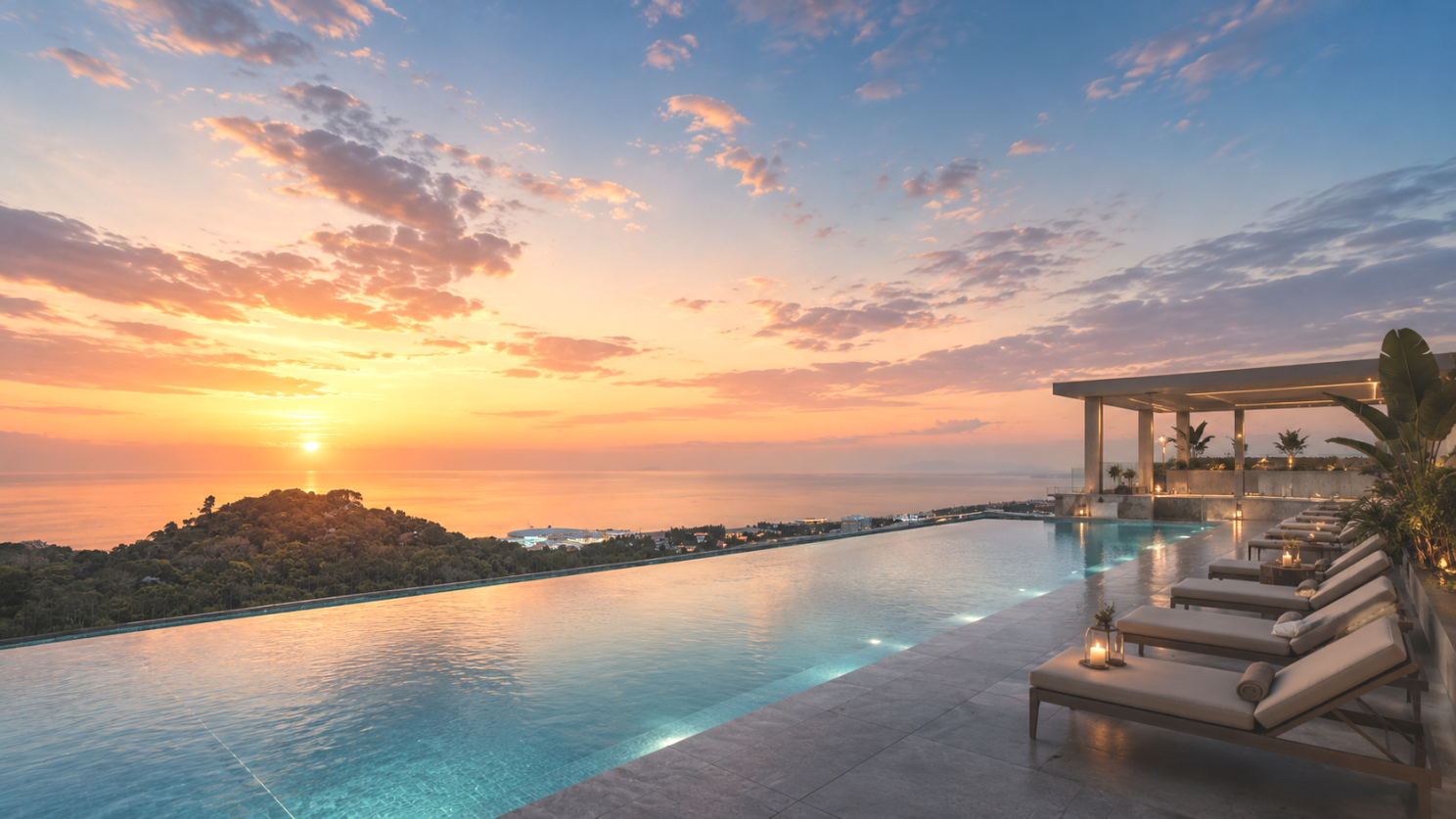
sunset views become part of daily living
nature becomes integrated into the ownership experience
openness becomes part of the emotional value
This creates a different kind of luxury: not necessarily larger ownership — but broader living.
Why Lifestyle Space Matters
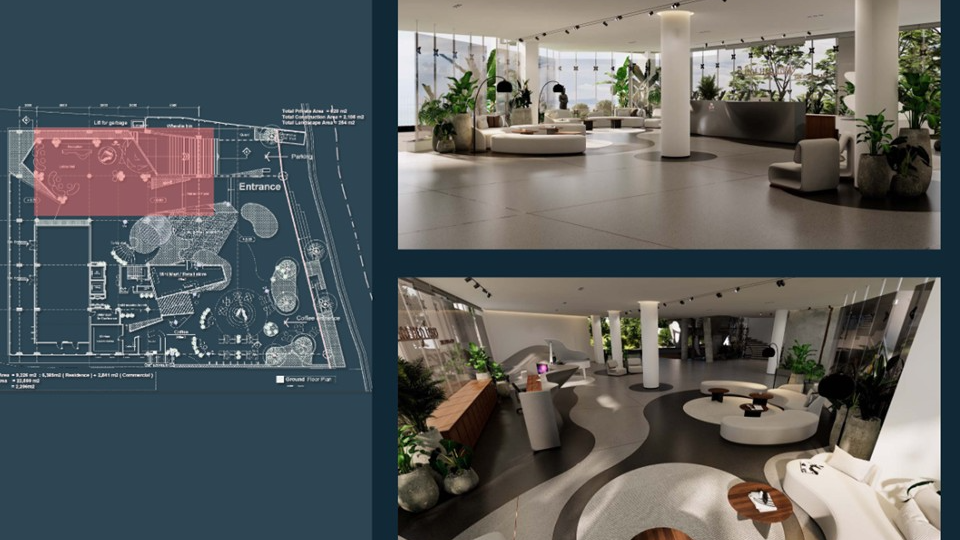
A residence is rarely experienced only from inside its walls.
People remember:
the rooftop atmosphere
the ocean breeze
the infinity pool at sunset
the quietness of shared spaces
the openness between buildings
the emotional calmness of the environment
These are intangible qualities.
Yet often, they become the most valuable part of ownership.
Especially in second-home and lifestyle destinations, emotional quality matters enormously because buyers are not simply purchasing shelter.
They are purchasing:
escape
recovery
wellness
atmosphere
slower living
And these experiences cannot be measured purely in square meters.
The Rise of Experience-Based Ownership
Globally, lifestyle real estate is increasingly moving toward what could be called: experience-based ownership.
Projects are becoming less focused on maximizing density and more focused on:
environmental quality
wellness integration
low-density living
emotional comfort
long-term lifestyle value
This is especially relevant in emerging coastal destinations like Kep, where buyers are still able to enter before large-scale saturation occurs.
And perhaps that is why projects designed around experience rather than compression are becoming increasingly attractive.
Beyond Square Meters
Ultimately, the most memorable places are rarely remembered because they had the highest sellable ratios.
They are remembered because of how they made people feel.
The sea breeze. The openness. The sunset horizon. The quietness. The atmosphere.
Because sometimes, the true value of ownership is not found inside the walls of a residence.
It is found in the life experienced beyond them.
Contact for details
Analog: +855-10-699-553
💬 Telegram: t.me/hoemseiha_era
💬 WhatsApp: wa.me/85510699553
💬 Line ID: hoemseiha
📧 Email: hoem.seiha@eracambodia.com
Curated by Hoem Seiha – ERA Curator of Luxe Residences | ERA Cambodia
